
From simple faucets to game-style rewards
A traditional crypto faucet is simple: wait for a cooldown, complete a claim, receive a small reward, and repeat. That model works, but it can become repetitive quickly. Crypto faucet games build on the same foundation while adding progression systems that make each action feel more useful.
Instead of only earning coins, users might also gain XP, complete missions, refill energy, open chests, collect gear, upgrade stats, climb leaderboards, or fight a daily boss. The reward is still small, but the experience has more texture.
Why game systems help faucets
Faucets need repeat visits to survive. Users need a reason to come back that is stronger than a single claim button. Game systems help because they create short goals and long goals at the same time.
A short goal might be clearing one more Campaign stage or opening the next chest. A long goal might be building a full gear set, increasing damage, raising account level, or improving daily boss performance. That gives users something to care about between withdrawals.
How Lightning Quest fits the crypto faucet game model
Lightning Quest combines a faucet with quests, shortlinks, offerwalls, Surf Points, referrals, Campaign Mode, and daily boss fights. Users earn coins and XP from normal site activity, then use energy and game rewards to build a stronger knight.
Campaign Mode gives the solo path. Daily boss fights give the shared competition path. Campaign Chests connect both by rewarding XP potions, energy, scrap, temporary boosts, and gear drops.
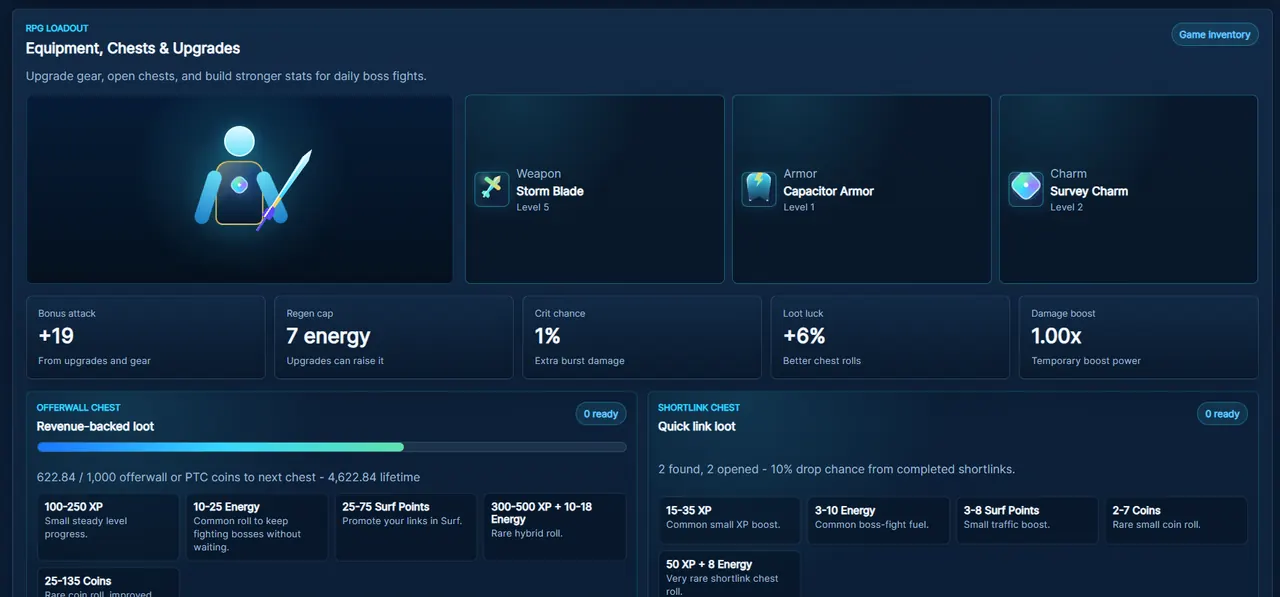
Good crypto faucet games need coin sinks
A faucet game needs places for users to spend coins inside the game. Without coin sinks, users only withdraw, and the site has fewer tools to support shared reward pools or long-term progression. Good coin sinks feel useful rather than punitive.
Examples include upgrading gear, buying scrap, improving permanent upgrades, refilling energy, or spending coins on traffic promotion. These sinks give users more decisions while helping keep the economy healthier.
Fraud prevention matters even more with games
When a faucet adds game rewards, it also adds more ways for bad actors to abuse the economy. Duplicate accounts, VPN abuse, automated actions, fake offerwall completions, and referral abuse can all damage rewards for real users.
That is why a serious crypto faucet game needs fraud checks, account limits, IP and device monitoring, manual review tools, partner reversal handling, and clear rules. Protecting the economy is part of making the game fair.
What users should expect
Users should expect small rewards, steady progression, and a mix of quick actions and higher-value tasks. Faucet games are not a replacement for work or investing. They are a way to earn modest rewards while playing a lightweight progression game.
The best experience comes from building a routine: claim the faucet, complete missions, try offerwalls or surveys, use energy wisely, open chests, upgrade gear, and withdraw when ready.